MV Hondius Hantavirus: How Disinfecting Touch Surfaces and HVAC Systems Could Have Reduced the Risk
The MV Hondius hantavirus outbreak (May 2026) killed three people and infected at least seven aboard a Dutch expedition cruise ship. The primary transmission pathways were aerosolized rodent excreta on touch surfaces and contaminated HVAC ventilation ducts. A proactive protocol combining rodent exclusion, routine broad-spectrum surface disinfection, and periodic HVAC antiviral treatment could have significantly reduced the risk of both initial contamination and secondary spread aboard the vessel.
What Happened Aboard the MV Hondius
In early May 2026, the world watched in alarm as the Dutch expedition cruise ship MV Hondius became the center of a deadly hantavirus outbreak — one of the first ever confirmed aboard a seagoing vessel at this scale. The ship, which had departed Ushuaia, Argentina in late March and called at remote Antarctic and South Atlantic locations, reported its first death as early as April 11, when a 70-year-old passenger died on board.
As the vessel made its way north toward West Africa, the situation deteriorated. A 69-year-old woman — the first victim’s wife — died at Johannesburg’s international airport on April 24. A German national died aboard on May 2. By May 4, the World Health Organization (WHO) had confirmed seven cases of hantavirus, with human-to-human transmission — a characteristic almost exclusive to the Andes virus strain — under active investigation.
Cape Verde refused the ship permission to dock. The MV Hondius was left stranded in the Atlantic, carrying approximately 150 passengers and crew, while Spanish authorities prepared a full epidemiological investigation and disinfection at the Canary Islands.
This article is an educational hygiene analysis. It does not assign blame to any individual, operator, or authority. The goal is to identify the disinfection and environmental control protocols that could reduce risk in similar enclosed environments in the future.
How Hantavirus Enters and Spreads in an Enclosed Vessel
To understand what could have been done differently, it is essential to understand how hantavirus — specifically the Andes virus strain identified in this outbreak — operates in a confined, climate-controlled environment like a cruise ship.
The source: rodent contamination
Hantaviruses are zoonotic — they originate in rodents. Infected rodents shed the virus through urine, feces, and saliva. A ship that loads cargo, provisions, or equipment at ports with rodent populations — especially remote South American ports — faces a real and underestimated risk of introducing infected animals or contaminated materials into below-deck spaces.
Rodents typically colonize storage areas, engine rooms, galley spaces, and the pathways between them — exactly the zones that feed into a ship’s ventilation infrastructure.
Pathway one: touch surfaces
Once rodents are present — or have been present — their dried excreta can contaminate a wide range of surfaces that crew and passengers contact daily:
- Door handles and push plates in crew corridors and storage access points
- Galley and food preparation surfaces in crew mess areas
- Handrails in service stairwells and below-deck passageways
- Equipment handles — trolleys, cleaning equipment, maintenance tools
- Elevator buttons and shared control panels
- Laundry and linen handling areas
According to established research, hantavirus can survive on surfaces for 12–15 days in contaminated environments and for several days at room temperature on hard surfaces. This extended surface survival means that a single contamination event can create an ongoing risk for days — and in a confined ship environment, that risk multiplies with every person who touches the same surface.
Pathway two: HVAC and ventilation systems
This is the pathway that makes hantavirus particularly dangerous aboard ships — and particularly difficult to contain after the fact.
Hantavirus is primarily transmitted by inhalation of aerosolized particles. When infected rodent droppings or urine dry out, microscopic viral particles become suspended in the air. In a building or home, this is dangerous enough. In a ship’s ventilation system, it is potentially catastrophic.
How HVAC spreads the risk: A ship’s HVAC system draws air from below-deck spaces, through ductwork, and distributes it to cabins, dining areas, and common spaces. If rodent contamination exists in the intake zones, service areas, or ducts themselves, the system can distribute aerosolized hantavirus particles across the entire vessel — to passengers who have never been near the source area and would have no reason to suspect exposure.
Investigators examining the MV Hondius situation have noted that “all the droplets, all the dust in every room, all the kitchens, all the ventilation systems need to be sampled and then cultured.” This statement itself reveals the scale of HVAC contamination that investigators expected to find — and the degree to which it had been overlooked during routine operations.
The Two Critical Failure Points — and What Should Have Been Done
✖ What went wrong
- No proactive broad-spectrum antiviral protocol for touch surfaces in below-deck areas
- HVAC ducts not treated as a potential viral transmission vector
- Rodent infestation risk not treated as a biosecurity threat at provisioning ports
- First death attributed to unknown cause — viral spread continued undetected
- No standing protocol for aerosolized pathogen risk in confined vessel environments
✔ What should be standard
- Routine broad-spectrum disinfection of all high-contact surfaces in crew and service areas
- Periodic HVAC duct inspection, sampling, and antiviral treatment before and during voyages
- Rodent exclusion protocols at every port of call, especially in endemic regions
- Standing respiratory illness response protocol triggered at the first unexplained death
- Broad-spectrum antiviral disinfectant on every vessel — not just antibacterials
Why Conventional Shipboard Cleaning Fails Against Hantavirus
Most ships carry standard cleaning and sanitizing products designed primarily for bacterial contamination — legionella in water systems, norovirus on surfaces, E. coli in galleys. These are real threats, and ships are generally well-equipped to handle them.
Hantavirus is an entirely different adversary:
- It is a zoonotic RNA virus, not a bacterium — many antibacterial-only products offer zero protection
- It survives longer on surfaces than most common ship pathogens (up to 15 days in contaminated materials)
- Its primary transmission route — aerosol inhalation — bypasses surface-only disinfection entirely if HVAC is not addressed
- The Andes strain, confirmed in this outbreak, has the unique and alarming ability to spread with limited human-to-human transmission — meaning even crew and passengers without direct rodent exposure became cases
What is needed is not simply more cleaning — it is broader-spectrum antimicrobial coverage that addresses viral threats with the same rigor applied to bacterial ones, combined with HVAC-specific decontamination protocols.
The VireXbuster Protocol: What Proactive Protection Looks Like
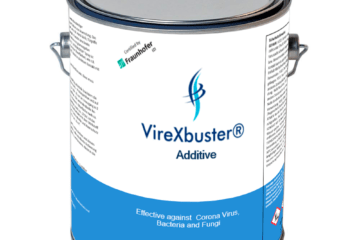
VireXbuster, developed by DaXem GmbH in Eschborn, Hessen, Germany, is a hybrid broad-spectrum antimicrobial formulation with a very wide spectrum of activity against viruses, bacteria, fungi, mold, and mildew. It is precisely this kind of multi-target disinfectant that an outbreak like the MV Hondius demands — not as a reactive treatment after cases emerge, but as a continuous preventive protocol embedded in daily operations.
Here is what a VireXbuster-based ship hygiene protocol would look like across the two critical transmission vectors:
Layer 1: Touch surface disinfection protocol
- Daily disinfection of all high-contact surfaces in crew areas Door handles, handrails, galley equipment, elevator buttons, and control panels in crew corridors and service areas should be treated with a broad-spectrum antiviral disinfectant — not just cleaned. VireXbuster’s hybrid formulation provides antiviral coverage that standard antibacterial sprays do not.
- Pre-voyage deep disinfection of below-deck storage and service areas Before each voyage, storage holds, engine room access points, and galley service areas should be thoroughly treated. These are the areas where rodents are most likely to have been present — and where surface viral load would be highest.
- Port-of-call disinfection refresh after cargo loading Every time the ship takes on cargo or provisions at a port — especially in hantavirus-endemic regions like South America and Patagonia — all loading areas and access corridors should be re-treated. The risk of introducing contaminated material is highest at these moments.
- Immediate response protocol for any unexplained respiratory illness Standing orders should trigger a full surface disinfection of all shared spaces — and isolation of the affected individual — at the first sign of unexplained severe respiratory illness. On the MV Hondius, the first death occurred on April 11. A trigger-response protocol could have initiated decontamination weeks before the WHO was notified.
Layer 2: HVAC disinfection and ventilation control protocol
- Pre-voyage HVAC inspection and duct sampling Every ventilation duct intake, air handler, and distribution point in below-deck spaces should be inspected for rodent activity and tested for biological contamination before departure. This is currently not standard in most commercial vessel sanitation protocols — and the MV Hondius outbreak demonstrates exactly why it must become so.
- Antiviral treatment of HVAC ductwork Broad-spectrum antiviral disinfectants should be applied to ductwork surfaces and HVAC components in below-deck service areas. VireXbuster’s hybrid formulation is suited for surface application in ventilation-related environments. All below-deck air intakes in rodent-risk zones should be treated as biological contamination points.
- HEPA and UV-C air filtration supplementation In addition to chemical disinfection, HVAC systems on expedition vessels should incorporate HEPA filtration and UV-C air treatment in duct sections that draw air from high-risk below-deck areas. This creates a second line of defense against aerosolized viral particles before they reach passenger and crew spaces.
- Compartmentalization during any respiratory illness event The moment an unexplained respiratory illness is identified, ventilation zones should be isolated to prevent cross-cabin air circulation from potentially spreading airborne viral particles. Affected cabins should be placed under negative pressure or disconnected from shared air handling where technically possible.
What the Science Says About Disinfecting Hantavirus
According to the Centers for Disease Control and Prevention (CDC) and published biosafety data, hantavirus is susceptible to a range of broad-spectrum disinfectants, including:
- Sodium hypochlorite (bleach) at 1% — 10 minute contact time
- Peracetic acid at 1–5% — effective with adequate contact time
- Chlorine dioxide (e.g. Clidox) at 1–5%
- Ethanol at 70% — 30 minute contact time required
- Broad-spectrum antiviral formulations incorporating multiple active mechanisms
Critically, the CDC notes that hantavirus is inactivated within a week in outdoor environments and is particularly vulnerable to UV light — but in the dark, humid, enclosed below-deck spaces of a ship, the virus can persist for significantly longer. This is precisely the environment where professional-grade, broad-spectrum antiviral disinfection is not optional: it is a necessity.
Key insight: A disinfectant that is only antibacterial — or only effective against enveloped viruses — is not sufficient for hantavirus prevention in a confined environment. The formulation must cover the full spectrum of viral threats, including non-enveloped and zoonotic viruses. This is the fundamental gap that the MV Hondius situation has exposed in standard vessel hygiene protocols.
Lessons for Shipping Companies, Port Authorities, and Vessel Operators
The MV Hondius outbreak is not just a tragedy — it is a turning point. Here are the immediate and structural lessons that vessel operators and maritime health authorities should take from this event:
Treat antiviral disinfection as a category equal to antibacterial
Norovirus protocols exist on virtually every cruise ship. Hantavirus protocols do not — because the threat was historically associated with terrestrial environments. That assumption is now obsolete. Any vessel that operates in South America, Southern Africa, or other hantavirus-endemic regions must implement antiviral disinfection protocols specifically.
HVAC systems are biological vectors — treat them accordingly
The maritime industry’s approach to HVAC has focused primarily on Legionella in water and temperature control for crew comfort. The MV Hondius outbreak has established, for the first time at this scale, that ventilation systems can distribute zoonotic aerosolized viruses through an entire vessel. HVAC biosecurity must become part of every vessel’s mandatory pre-departure checklist.
Route-specific biosecurity risk assessment is essential
Expedition vessels that call at Ushuaia, Patagonian ports, or other areas where hantavirus is endemic must treat every port stop as a potential biosecurity event. Cargo loading areas and gangway contact zones should be disinfected with broad-spectrum antiviral products after each port call — not just during norovirus season or in response to an outbreak.
One broad-spectrum product can replace a fragmented protocol
Ships that carry separate products for bacteria, norovirus, and mold create complexity and gaps. A single hybrid broad-spectrum disinfectant — one that covers viruses, bacteria, fungi, mold, and mildew — simplifies the protocol, reduces the risk of gaps, and ensures crew training stays focused on one consistent procedure rather than multiple products for multiple threats.
Frequently Asked Questions
How does hantavirus spread on a ship?
Hantavirus spreads primarily through contact with infected rodent urine, droppings, or saliva. On ships, the key risk vectors are contaminated touch surfaces — door handles, handrails, galley equipment — and HVAC systems that can aerosolize dried rodent excreta from below-deck areas into passenger cabins. In the MV Hondius outbreak, the Andes hantavirus variant — the only strain capable of limited human-to-human transmission — was identified.
Can hantavirus survive on touch surfaces?
Yes. Hantavirus can survive on surfaces for 12–15 days in contaminated bedding and several days at room temperature on hard surfaces. This makes regular disinfection of high-contact surfaces critical aboard confined environments like ships, particularly in below-deck crew and service areas.
Can HVAC systems spread hantavirus?
Yes. Hantavirus is primarily transmitted by inhalation of aerosolized viral particles. When rodents contaminate ventilation ducts or HVAC components with urine or droppings, the system can distribute microscopic viral particles throughout an enclosed vessel. This is a critical transmission pathway in confined-space outbreaks like the MV Hondius case.
What disinfectants are effective against hantavirus?
According to the CDC and WHO, hantavirus is susceptible to broad-spectrum disinfectants including sodium hypochlorite (bleach), peracetic acid, chlorine dioxide, and ethanol-based formulations. Broad-spectrum hybrid disinfectants with wide antiviral activity — such as VireXbuster — are suitable for routine surface decontamination in high-risk enclosed environments.
What should ships do to prevent hantavirus outbreaks?
Ships should implement a three-layer prevention protocol: (1) Rodent exclusion and control to prevent infestation of below-deck areas; (2) Regular disinfection of all touch surfaces — especially in galleys, storage areas, and crew quarters — using a broad-spectrum antiviral disinfectant; (3) HVAC inspection and disinfection, including duct sampling, filter replacement, and antiviral treatment of ventilation systems before and during voyages to ports in endemic regions.
What is the Andes hantavirus and why is it different?
Andes virus is a hantavirus strain endemic primarily to South America — particularly Argentina and Chile. It is the only hantavirus strain with documented, if limited, human-to-human transmission capability. This makes it significantly more dangerous in confined group settings than other hantavirus strains, and it is the strain confirmed in the MV Hondius outbreak.
Is VireXbuster effective against hantavirus?
VireXbuster is a hybrid broad-spectrum disinfectant formulated with a very wide spectrum of activity against viruses, bacteria, fungi, mold, and mildew. For specific efficacy data and application guidance for hantavirus prevention protocols, please contact DaXem GmbH directly via www.virexbuster.de.
The Bottom Line
Three people lost their lives. Approximately 150 people were stranded at sea, confined to their cabins, unable to dock at ports, waiting for a vessel-wide decontamination that should have been running as a routine preventive protocol from the very first day of the voyage.
The MV Hondius outbreak is a sobering reminder that biological threats in maritime environments are not limited to bacteria and norovirus. Zoonotic viruses — carried by rodents, distributed through ventilation systems, surviving for weeks on surfaces in the dark below decks — represent a category of risk that the maritime industry has not yet fully addressed.
The answer is not complexity. It is not a dozen specialized products for a dozen specific threats. The answer is a single, proven, broad-spectrum hybrid disinfectant that covers the full range of biological threats — applied consistently to touch surfaces and HVAC systems, before an outbreak begins, not after lives are lost.
VireXbuster, by DaXem GmbH in Eschborn, Germany, is built for exactly this purpose.
Protect your vessel, facility, or institution
Order VireXbuster or request information about our professional bulk and institutional supply. Fast shipping across Germany and Europe.
Order VireXbuster at virexbuster.de →About DaXem GmbH
DaXem GmbH is a German life sciences and hygiene solutions company headquartered in Eschborn, Hessen, Germany (65760). The company develops and distributes advanced antimicrobial products for professional and consumer markets across Europe. DaXem GmbH’s flagship product, VireXbuster, is available at www.virexbuster.de.
Disclaimer: This article is intended for educational and informational purposes only. It does not constitute medical or public health advice. Information about the MV Hondius outbreak is based on publicly available reporting from WHO, CNN, NBC News, CBC, and other credentialed news sources as of May 5, 2026. DaXem GmbH makes no claims regarding the specific efficacy of VireXbuster against Andes hantavirus in the absence of formally conducted and published efficacy studies for this specific pathogen. For acute outbreak response, always follow WHO, CDC, and national public health authority guidance. For product efficacy data and professional application guidance, contact DaXem GmbH directly.