Antimicrobial surface protection is getting fresh attention this month. Good news arrived from the CDC this month: healthcare-associated infections (HAIs) in U.S. hospitals have dropped noticeably since 2015. According to new survey data published in The New England Journal of Medicine, about 1 in 38 hospitalized patients had at least one HAI in 2023, down from 1 in 31 patients in 2015. Central line-associated bloodstream infections, catheter-associated urinary tract infections, and C. difficile infections all showed significant declines — a real win for infection control programs, stricter protocols, and better hand hygiene compliance across the healthcare system.
But the same report contains a number that deserves more attention than the headline: an estimated 518,000 HAIs still occurred in U.S. hospitals in 2023, and 61% of them were not associated with any medical device or procedure at all. Surgical site infections and pneumonia, two of the most common HAI categories, showed almost no improvement. In other words, a majority of hospital-acquired infections aren’t coming from catheters or ventilators. They’re coming from the everyday environment: hands, equipment, bed rails, door handles, and the surfaces patients and staff touch dozens of times a day between formal cleaning cycles.
Why “Between Cleanings” Is the Gap That Matters
Hospital cleaning and disinfection protocols are rigorous, but they are also periodic. A surface disinfected at 8 a.m. can be re-contaminated within minutes as staff, patients, and visitors move through a room. Traditional disinfectants kill what’s present at the moment of application, then their effect fades, leaving hours of exposure before the next cleaning cycle. That gap is exactly where a supplemental layer of protection can help reduce the microbial burden on high-touch surfaces between routine disinfection.
This is the category VireXbuster occupies. It is not a disinfectant, and it is not positioned as a replacement for existing cleaning protocols. In the U.S., the EPA classifies this type of product as a Supplemental Residual Antimicrobial Product (SRAP), a distinct category from disinfectants, intended to work alongside standard cleaning routines rather than instead of them.
How VireXbuster Fits Into Healthcare Environments
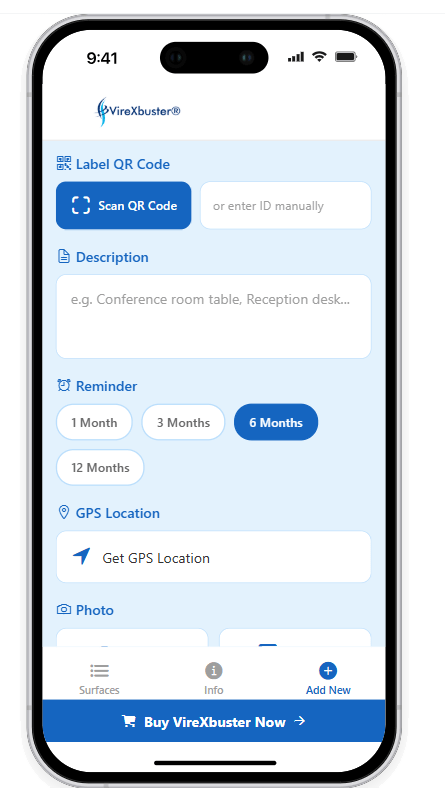
VireXbuster Spray is designed for exactly this “between cleanings” gap. It’s a hybrid formulation with a very wide spectrum of activity against viruses, bacteria, fungi, mold, and mildew, applied to existing hard and soft surfaces, bed rails, door handles, workstations, waiting room furniture, and more, with protection that can last up to 12 months per application. It’s already used in hospitals, offices, and transport settings across Europe.
For facilities managing plastics and fittings at the manufacturing stage, VireXbuster 4Bulk is an additive mixed directly into polymer pellets during extrusion or injection molding, giving finished plastic products, including polymer flooring, embedded, long-term antimicrobial protection that doesn’t wear off with surface cleaning.
And for walls and ceilings in patient rooms, offices, or clinics, VireXbuster Wall is a waterborne antimicrobial paint that applies like any standard interior paint job, with no special equipment required.
VireXbuster is BAuA approved, Fraunhofer tested, QualityLabs certified as antimicrobial, and Dermatest certified “Excellent” for dermatological safety. Visit https://www.virexbuster.de/shop to review the full product range.
FAQ
Is VireXbuster a disinfectant?
No. VireXbuster is a residual antimicrobial product designed to work alongside, not replace, regular cleaning and disinfection. In the U.S., the EPA defines this product category as a Supplemental Residual Antimicrobial Product (SRAP).
Where does VireXbuster make the most sense in a healthcare setting?
On high-touch surfaces that get re-contaminated quickly between cleaning cycles: bed rails, door handles, furniture, workstations, and other frequently touched hard and soft surfaces.
How is VireXbuster different from a one-time spray disinfectant?
Standard disinfectants act at the moment of application and then their effect diminishes. VireXbuster Spray is formulated to provide antimicrobial protection on treated surfaces for up to 12 months per application, reducing the microbial burden between cleanings.