By DaXem GmbH | virexbuster.de | Published: 19 May 2026
A 79-year-old man from Landkreis Regen, Bavaria, is currently on the intensive care unit after contracting Borna Disease Virus 1 (BoDV-1). How he was infected remains unclear. He is one of several new Bornavirus cases reported in Bavaria in 2026 alone — following cases in Augsburg, Bad Wörishofen (Landkreis Unterallgäu), and Landkreis Erding, and a fatality in Landkreis Tirschenreuth in autumn 2025.
The news has triggered fresh warnings from Bavaria’s health authority, the Landesamt für Gesundheit und Lebensmittelsicherheit (LGL). Crucially, those warnings focus heavily on surfaces: where animal excretions settle, how long pathogens persist, and how people should clean potentially contaminated spaces.
What Is Bornavirus (BoDV-1) and Why Is It So Dangerous?
Borna Disease Virus 1 (BoDV-1) is a zoonotic pathogen — a virus that circulates in animals and can jump to humans under certain conditions. In humans it causes severe encephalitis (brain inflammation). According to the Robert Koch Institut (RKI), the fatality rate in confirmed human cases is very high, and survivors often sustain permanent neurological damage.
Key facts about BoDV-1:
- Carrier: The field shrew (Crocidura leucodon, Feldspitzmaus) is the primary known reservoir in Central Europe
- Transmission to humans: Direct contact with infected shrews or indirect contact with their excretions (saliva, urine, droppings)
- Human-to-human transmission: Does not occur
- Vaccine: None available
- Specific antiviral therapy: None available
- Notifiable in Germany since: 2020
- Annual cases nationally: Fewer than 10 reported per year — the majority in Bavaria
The scientific link between BoDV-1 and human encephalitis was only confirmed in 2018. The disease is still poorly understood, which means prevention — not treatment — is the only tool currently available.
How Does Bornavirus Reach Humans Through Surfaces?
The field shrew is common across Central Europe. It inhabits gardens, hedgerows, meadows, woodland edges, and agricultural land — and it regularly enters human-occupied spaces: garages, barns, cellars, attics, garden sheds, and storage buildings.
Once inside, infected shrews leave behind excretions on surfaces: droppings on floors and shelves, urine traces on insulation and stored materials, saliva on objects they have explored. In confined, dusty spaces, dried excretions can become airborne particles — a particularly high-risk exposure route.
The LGL identifies the following as the main risk scenarios:
- Handling live or dead shrews without gloves
- Carrying out dusty work (clearing, sweeping, renovation) in spaces where shrews have been present
- Contact with surfaces, stored materials, or insulation contaminated with shrew excretions
Official Prevention Guidance from LGL Bayern
According to the Bayerisches Landesamt für Gesundheit und Lebensmittelsicherheit, the following protective measures are essential:
- Never touch shrews with bare hands — live or dead
- Dispose of dead animals in a sealed plastic bag in household waste
- When working in areas with potential shrew activity: wear rubber gloves, protective goggles, and a fine particulate mask (FFP2)
- After potential exposure: shower, wash clothing separately
- Thoroughly clean contaminated surfaces before re-use
That last point — thorough surface cleaning — is where the gap in protection most commonly occurs. Surfaces in a garage, barn, or cellar cannot always be cleaned continuously. They may be cleaned after a known incident, but re-contamination is possible in areas of regular animal activity.
The Role of Antimicrobial Surface Protection
Standard cleaning removes visible contamination at a point in time. What it cannot do is provide protection during the intervals between cleaning — the hours or days when a surface is not being actively treated but may be touched, disturbed, or re-contaminated.
VireXbuster is an independently certified antimicrobial coating that provides continuous broad-spectrum activity against viruses, bacteria, fungi, mold, and mildew on treated surfaces — not just at the moment of application, but persistently over months.
Applied to floors, walls, shelving, and surfaces in high-risk spaces (garages, agricultural outbuildings, cellars, storage rooms), VireXbuster reduces the pathogen burden on those surfaces around the clock — between every cleaning event.
VireXbuster is independently validated:
- ✓ Fraunhofer Institute tested — broad-spectrum antimicrobial efficacy confirmed
- ✓ BauA approved — Federal Institute for Occupational Safety and Health, Germany
- ✓ QualityLabs certified antimicrobial product
- ✓ Dermatest “Excellent” — safe for skin contact
Which VireXbuster Products Are Relevant?
VireXbuster Spray (400ml / 1L Canister)
For hard surfaces in garages, cellars, and storage facilities. Transparent, applies by spray or spray-gun, active for up to 12 months.
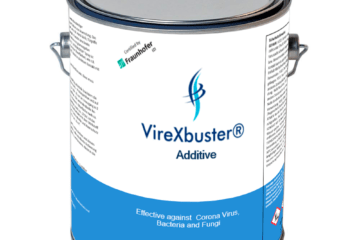
VireXbuster Additive (liquid, 0.1kg or 1L)
Mix into any existing wall paint or coating to convert it into a long-lasting antimicrobial surface. Ideal for agricultural buildings.
VireXbuster Spray HVAC (400ml)
For ventilation and HVAC systems — relevant where dusty, potentially contaminated air passes through air handling equipment.
Cordless VireXbuster Sprayer
Professional cordless sprayer for efficient application across larger surfaces — floors, shelving runs, wall panels.
Key Takeaways
- Bornavirus (BoDV-1) cases are rising in Bavaria in 2026, with multiple districts affected
- The virus is transmitted by field shrews via excretions — not person to person
- Surfaces in garages, cellars, barns, and storage spaces are key risk points
- Official LGL Bayern guidance emphasises thorough cleaning of contaminated surfaces
- Antimicrobial surface coatings (VireXbuster) reduce pathogen load between cleaning events as a supplemental measure
- No vaccine or specific therapy exists — prevention is the only available tool
Frequently Asked Questions
What is Bornavirus and how does it spread?
Borna Disease Virus 1 (BoDV-1) is a rare, nearly always fatal zoonotic virus carried by the field shrew (Feldspitzmaus). It spreads to humans through direct contact with infected shrews or indirect contact with their excretions — including saliva, urine, and droppings on surfaces. It does not spread from person to person.
Why are Bornavirus cases rising in Bavaria?
Bavaria has the highest concentration of BoDV-1 cases in Germany due to the geographic distribution of infected field shrew populations. Increased awareness and mandatory reporting since 2020 have improved case detection. In 2025–2026, cases have been reported across Augsburg, Unterallgäu, Erding, Tirschenreuth, and Regen.
Is there a vaccine or treatment for Bornavirus?
No. As of 2026, there is no approved vaccine against BoDV-1 and no specific antiviral therapy. Treatment is supportive and symptomatic. Prevention is the only currently effective strategy.
Which surfaces should I clean after potential contact with shrews?
Clean any surface where shrews may have been active: floors, shelves, stored items, insulation, garden tools, straw, hay, and dusty areas in garages, cellars, barns, or attics. Wear gloves, goggles, and an FFP2 mask during cleaning in such environments, as recommended by LGL Bayern.
Can antimicrobial coatings like VireXbuster protect against Bornavirus?
VireXbuster provides broad-spectrum antimicrobial activity against viruses, bacteria, fungi, mold, and mildew on treated surfaces. It is not a specific Bornavirus treatment and does not replace official LGL/RKI prevention measures. As a supplemental measure, it reduces overall pathogen load on surfaces between cleaning events.
Where do field shrews typically enter buildings?
Field shrews commonly enter garages, cellars, basements, garden sheds, barns, and attics — particularly in rural and semi-rural areas. They can be present year-round and leave virus-contaminated excretions on surfaces they visit.
What should I do if I find a dead shrew?
Do not touch it with bare hands. Use rubber gloves to place it in a sealed plastic bag and dispose in normal household waste. Clean the surrounding area. If you had unprotected contact, consult a doctor.
For official guidance, visit the Bayerisches Landesamt für Gesundheit und Lebensmittelsicherheit (LGL) and the Robert Koch Institut (RKI).
VireXbuster products are independently certified antimicrobial surface protection solutions manufactured by DaXem GmbH, Eschborn, Germany. VireXbuster is not a disinfectant, does not prevent Bornavirus infection, and does not replace official health authority guidance.