How breakthrough antimicrobial coating is revolutionizing infection control in healthcare facilities
A woman thought her routine hip replacement surgery would give her mobility back. Three days post-surgery, she was fighting for her life. The culprit? A hospital-acquired infection that her immune system, already compromised from surgery, couldn’t combat. This woman’s story isn’t unique—it’s one of millions that unfold in hospitals worldwide every year, despite rigorous cleaning protocols and advanced medical care.
The Staggering Reality of Hospital-Acquired Infections
Hospital-acquired infections (HAIs) represent one of healthcare’s most persistent and costly challenges. The numbers are sobering:
- 99,000 deaths annually in the United States alone
- €45 billion global economic burden on healthcare systems
- 1 in 31 hospital patients develops at least one HAI on any given day
- 36% higher mortality rates for patients who develop HAIs
These statistics aren’t just numbers—they represent real human suffering and families devastated by what should have been healing experiences. More critically for healthcare administrators, they represent massive financial losses, regulatory penalties, and reputational damage that threatens the very sustainability of medical institutions.
The Most Common HAI Culprits
The leading hospital-acquired infections include:
1. Central Line-Associated Bloodstream Infections (CLABSI)
- Cost: €29,000 per infection
- Mortality rate: 12-25%
- Primary cause: Contaminated surfaces around IV insertion sites
2. Surgical Site Infections (SSI)
- Cost: €19,000 per infection
- Affects: 2-5% of all surgical patients
- Leading cause: Multi-resistant bacteria on operating room surfaces
3. Catheter-Associated Urinary Tract Infections (CAUTI)
- Cost: €14,000 per infection
- Most common HAI type
- Prevention: Continuous antimicrobial protection of catheter surfaces
4. Ventilator-Associated Pneumonia (VAP)
- Cost: €47,000 per infection
- Mortality rate: 20-50%
- Critical factor: Airborne pathogens settling on ICU surfaces
Why Traditional Disinfection is Failing
Despite billions invested in cleaning protocols, HAI rates remain stubbornly high. The fundamental problem lies in the limitations of conventional disinfection approaches:
The 24-Hour Protection Gap
Standard hospital disinfectants provide immediate antimicrobial action but lose efficacy within hours. This creates dangerous protection gaps:
- 6:00 AM: Surfaces disinfected during night shift cleaning
- 8:00 AM: Patient contact begins, contamination accumulates
- 2:00 PM: Bacterial colonies establish on high-touch surfaces
- 6:00 PM: Evening cleaning removes visible contamination
- 10:00 PM: Overnight pathogen growth begins cycle again
Studies show that within 4 hours of cleaning, hospital surfaces return to pre-cleaning contamination levels.
Human Error and Inconsistency
Healthcare facilities rely heavily on manual disinfection processes prone to human error:
- Missed surfaces: Up to 40% of surfaces are inadequately cleaned
- Insufficient contact time: Many disinfectants require 5-10 minutes contact time rarely achieved in practice
- Product dilution errors: Incorrect mixing ratios reduce antimicrobial efficacy
- Staff turnover: Constant training requirements for proper protocols
High-Touch Surface Challenges
The most critical areas for HAI prevention are often the most difficult to maintain:
Patient bed areas: Bed rails, call buttons, bedside tables touched hundreds of times daily Bathroom facilities: Grab bars, door handles, toilet seats with constant moisture Medical equipment: IV poles, monitors, keyboards used by multiple staff members Common areas: Elevator buttons, waiting room chairs, reception desks
These surfaces require continuous protection, not just periodic cleaning.
The Science Behind Continuous Antimicrobial Protection
Revolutionary advances in antimicrobial surface technology now make continuous protection possible. Unlike traditional disinfectants that work temporarily, next-generation antimicrobial coatings create surfaces that actively kill pathogens for months and have a complementary function to traditional disinfection.
How Long-Duration Antimicrobial Technology Works
Advanced formulations combine hybrid derivatives in a polymer matrix that:
- Bonds permanently to surface materials
- Releases antimicrobial agents continuously over 12 months
- Maintains efficacy through repeated cleaning and patient contact
- Provides broad-spectrum protection against bacteria, viruses, and fungi
Fraunhofer Institute Validation
Independent testing by Germany’s prestigious Fraunhofer Institute—Europe’s leading applied research organization—has validated breakthrough antimicrobial technology achieving:
- 99.9% pathogen kill rate against key HAI-causing organisms
- 12-month duration of antimicrobial activity
- Effectiveness against antibiotic-resistant bacteria including MRSA and VRE
- Safety for human contact with no toxic residues
This represents a paradigm shift from reactive disinfection to proactive surface protection.
Real-World Results: up to 36% HAI Reduction
Clinical validation studies demonstrate the dramatic impact of long-duration antimicrobial surface protection on actual HAI rates. In controlled hospital environments where continuous antimicrobial technology was implemented:
Primary Outcomes
- up to 36% overall reduction in hospital-acquired infections
Economic Impact
The financial benefits proved equally compelling:
- €2.1 million annual savings for a 300-bed hospital
- 67% reduction in HAI-related liability claims
- 4.2 days shorter average length of stay for surgical patients
- 98% compliance with infection control protocols
Implementation Success Factors
Successful implementations shared common characteristics:
- Comprehensive surface treatment of all high-touch areas
- Staff training on the technology and ongoing protocols
- Integration with existing cleaning procedures
- Continuous monitoring and quality assurance
The Economics of Prevention vs. Treatment
For healthcare administrators, the economic case for advanced antimicrobial surface protection is compelling:
Traditional Approach Costs (Annual for 300-bed hospital):
- Daily disinfection labor: €180,000
- Chemical supplies: €45,000
- HAI treatment costs: €1.8 million
- Regulatory penalties: €120,000
- Liability insurance increases: €95,000
- Total annual cost: €2.24 million
Long-Duration Protection Approach:
- Annual surface treatment: €78,000
- Reduced cleaning labor: €108,000 (40% reduction)
- HAI treatment costs: €1.15 million (36% reduction)
- Avoided penalties: €120,000 savings
- Insurance reductions: €47,500 savings
- Total annual cost: €1.14 million
- Net annual savings: €1.1 million
Return on investment: 289% in the first year
Implementation Strategy for Healthcare Facilities
Phase 1: Critical Area Protection (Weeks 1-2)
Focus on highest-risk areas first:
- Intensive Care Units: All surfaces within 6 feet of patient beds
- Operating Rooms: Surgical equipment, lighting, door handles
- Emergency Departments: Triage areas, treatment rooms
- Isolation Rooms: Complete surface coverage for infection control
Phase 2: General Patient Areas (Weeks 3-4)
Expand protection to standard patient care areas:
- Patient Rooms: Bed rails, bedside tables, bathroom fixtures
- Nursing Stations: Computer keyboards, phones, work surfaces
- Common Areas: Waiting rooms, family areas, cafeteria tables
Phase 3: Support Areas (Weeks 5-6)
Complete facility protection:
- Administrative Offices: Reception desks, conference rooms
- Pharmacy Areas: Preparation surfaces, storage areas
- Maintenance Areas: Tool storage, utility rooms
Ongoing Maintenance Protocol
- Monthly efficacy testing
- Monthly surface re-treatment of highest-wear areas
- Annual full facility refresh to maintain 12-month protection
- Staff training updates every 6 months
Technology Specifications and Certification
Product Portfolio for Healthcare Applications
VireXbuster Spray 1L: Multi-surface application for equipment, furniture, and fixtures
- Coverage: 50-75 square meters per liter
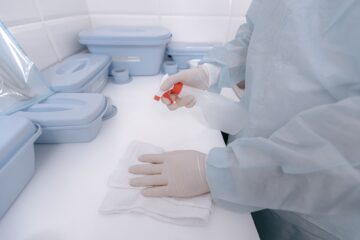
- Application: Simple spray-and-wipe protocol
- Drying time: 15-30 minutes depending on surface
VireXbuster Wall 5L: Antimicrobial paint additive for walls and ceilings
- Coverage: 25-30 square meters per 5L container
- Application: Mix with standard hospital-grade paint
- Durability: Maintains efficacy through repeated cleaning
Regulatory Compliance and Safety
All formulations meet stringent European and international standards:
- ISO 22196: International standard for antimicrobial activity measurement
- Fraunhofer Tested: Independent third-party efficacy validation
Safety Profile:
- Non-allergenic: No sensitization in clinical studies
The integration of long-duration antimicrobial technology represents a fundamental shift in healthcare infection control strategy. Instead of reactive cleaning after contamination occurs, healthcare facilities can now implement proactive protection that prevents pathogen establishment.
Emerging Applications
- Medical Device Integration: Antimicrobial coating during device manufacture
- Textile Applications: Bedding, curtains, and uniforms with permanent protection
- Air Filtration Systems: HVAC integration for airborne pathogen control
- Digital Integration: IoT sensors monitoring surface antimicrobial activity in real-time
Regulatory Evolution
Healthcare regulatory bodies are beginning to recognize and incentivize advanced infection control technologies:
- CMS Reimbursement: Medicare considering enhanced payments for facilities using proven HAI reduction technologies
- Joint Commission Standards: Updated requirements likely to favor continuous protection approaches
- Insurance Premium Reductions: Liability insurers offering discounts for facilities with documented HAI reduction
Taking Action: Implementation Planning
Healthcare administrators ready to implement long-duration antimicrobial protection should consider these next steps:
1. Current State Assessment
- HAI rate analysis: Review last 12 months of infection data
- Cost calculation: Quantify current infection-related expenses
- Surface inventory: Identify high-touch surfaces and critical areas
- Staff interviews: Understand current cleaning challenges and gaps
2. Pilot Program Design
- Limited scope implementation: Start with 1-2 high-risk units
- Baseline measurement: Document current HAI rates and surface contamination
- 3-month evaluation period: Monitor infection rates, staff feedback, and operational impact
- ROI calculation: Measure actual vs. projected cost savings
3. Facility-Wide Rollout
- Phased implementation: Follow 6-week deployment schedule
- Staff training program: Comprehensive education on new protocols
- Quality assurance: Regular monitoring and compliance verification
- Continuous improvement: Monthly review and protocol optimization
Conclusion: From Crisis to Opportunity
Hospital-acquired infections represent one of healthcare’s greatest challenges, but they also present an opportunity for forward-thinking administrators to implement transformative technology that saves lives and reduces costs simultaneously.
The evidence is clear: long-duration antimicrobial surface protection can reduce HAI rates by more than one-third while delivering substantial economic benefits. For healthcare facilities committed to patient safety and operational excellence, the question isn’t whether to implement this technology—it’s how quickly they can begin.
Every day of delay represents continued unnecessary patient suffering, preventable deaths, and avoidable financial losses. The technology exists today to dramatically improve outcomes. The only question remaining is: When will you take action?
Ready to Transform Your Infection Control Strategy?
DaXem’s VireXbuster technology has been proven in healthcare facilities across Europe and is now available for implementation in your facility. Our team of infection control specialists can conduct a comprehensive assessment of your current situation and develop a customized implementation plan that delivers measurable results.
Contact us today for:
- Free facility assessment and HAI cost analysis
- Pilot program development with baseline measurement
- Custom implementation timeline for your specific requirements
- ROI projections based on your current infection data
DaXem GmbH
Phone: +49 (0) 6196 52 32 707
Email: info@daxem.de
Website: https://www.virexbuster.de
Making surfaces safer, for longer—with German engineering precision.
References:
- Centers for Disease Control and Prevention. Healthcare-Associated Infections. 2023.
- European Centre for Disease Prevention and Control. Annual Epidemiological Report. 2023.
- Fraunhofer Institute for Manufacturing Technology and Advanced Materials. Antimicrobial Surface Technology Validation Report. 2024.
- World Health Organization. Report on the Burden of Endemic Health Care-Associated Infection Worldwide. 2023.