Hospital infections are moving in two different directions at once. New CDC data released this month brought good news: healthcare-associated infections (HAIs) in U.S. hospitals dropped from roughly 1 in 31 patients in 2015 to about 1 in 38 patients in 2023, according to a survey published July 15, 2026 in the New England Journal of Medicine. Cleaning protocols, stewardship programs, and better clinical practice are clearly working.
But the same week brought a less reassuring headline: researchers reported that Pseudomonas aeruginosa, one of the most dangerous hospital-associated bacteria, is developing resistance to last-line antibiotics even while patients are actively receiving treatment. It is a reminder that progress against infection is not a straight line — and that facilities cannot afford to treat hygiene as a box checked once a day.
The Overlooked Detail in the CDC Numbers
Buried in the CDC report is a statistic worth sitting with: 61% of all healthcare-associated infections in 2023 were not associated with a device like a central line or urinary catheter, and were not tied to a specific procedure. Pneumonia, surgical-site infections, and gastrointestinal infections made up the largest share.
In plain terms, a majority of HAIs are happening through everyday contact — hands, surfaces, shared equipment, high-touch points between one cleaning cycle and the next. Disinfectants do their job the moment they’re applied, but their effect fades. Surfaces are re-contaminated within minutes of a cleaning crew leaving the room, and re-contamination doesn’t wait for the next scheduled wipe-down.
Why Between-Cleaning Protection Matters More, Not Less
As resistant strains like drug-resistant P. aeruginosa become harder to treat once an infection takes hold, the more practical lever for facilities is reducing how often microbes get the chance to transfer from a surface to a patient or staff member in the first place.
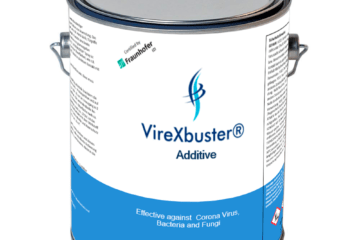
This is the gap that supplemental, longer-lasting surface protection is designed to address — not as a replacement for cleaning and disinfection protocols, but as a layer that continues working in between them. VireXbuster Spray is built exactly for that role: a hybrid formulation with a very wide spectrum of activity against viruses, bacteria, fungi, mold, and mildew, applied to existing surfaces — metal, plastic, hard and soft substrates alike — where it continues protecting for up to 12 months per application. It’s already used in hospitals, offices, transport, and other public spaces where high-touch surfaces are a constant risk factor.
It’s worth being precise about what this category of product is. In the U.S., the EPA classifies this category as a “Supplemental Residual Antimicrobial Product” — a distinct category from disinfectants, meant to work alongside your existing cleaning protocol rather than replace it. VireXbuster has been BAuA approved, Fraunhofer tested, and QualityLabs certified as antimicrobial, and Dermatest has certified it “Excellent” for dermatological safety.
For facilities managers and infection-control teams looking at their own numbers this year, the CDC’s national decline is genuinely encouraging. The resistant-pathogen story is the reminder that the surfaces between cleanings are still an open door — one that’s worth closing with more than a mop and a schedule.
Browse the full VireXbuster product range, including Spray, 4Bulk, and Wall, at the VireXbuster shop: https://www.virexbuster.de/shop
FAQ
Is VireXbuster Spray a disinfectant or a replacement for hospital cleaning protocols?
No. The EPA places this product category under “Supplemental Residual Antimicrobial Product,” distinct from disinfectants — designed to supplement, not replace, existing cleaning and disinfection routines by continuing to work on surfaces between cleanings.
How long does VireXbuster Spray protect a treated surface?
A single application provides protection for up to 12 months, depending on surface type and wear, making it suited to high-touch areas in hospitals, offices, and transport where re-treating surfaces after every cleaning cycle isn’t practical.
What certifications back VireXbuster’s safety and performance claims?
VireXbuster is BAuA approved (Germany’s Federal Institute for Occupational Safety and Health), Fraunhofer tested, QualityLabs certified as antimicrobial, and Dermatest certified “Excellent” for dermatological safety.