FIFA WORLD CUP 2026:
HYGIENE IS THE
INVISIBLE GAME‑CHANGER
Six million fans. Sixteen cities. Over a hundred match days. The world’s biggest tournament is also one of the world’s largest infection-control challenges — and it starts in less than 30 days.
On June 11, 2026, the opening whistle of FIFA World Cup 2026 will be heard simultaneously in three nations. What won’t be heard — but will matter just as much — are the millions of microbial hand-offs happening across every stadium seat, turnstile, restroom tap, and food-court counter.
Mass sporting events have long been recognised as high-risk environments for infectious disease transmission. The combination of dense crowds, international travel, shared surfaces, and stretched sanitation infrastructure creates conditions that pathogens exploit with ruthless efficiency. The 2026 edition of the World Cup — the largest in the tournament’s history — amplifies every one of those risk factors to a scale never seen before.
For venue operators, event organisers, hotel chains, transport authorities, and catering contractors, the window for action is closing. This article examines the real microbial threats at stake, the surfaces and settings that demand priority attention, and how professional-grade disinfection solutions like VireXbuster can become a frontline defence strategy — not an afterthought.
The Scale of the Challenge
FIFA World Cup 2026 is spread across 16 cities in the United States, Canada, and Mexico. Venues range from 65,000-seat NFL stadiums in Dallas, New York, and Miami to newly constructed football-specific facilities in Mexico City and Toronto. Fan zones, hospitality villages, official hotels, and transport corridors add millions of square metres of high-contact surface area to the hygiene equation.
International fans — travelling from over 200 countries — represent an unprecedented mixing of regional pathogen pools. Viruses endemic to Southeast Asia, bacteria common in Sub-Saharan Africa, fungal spores carried from the Middle East and South America: all converge in closed stadiums, air-conditioned fan zones, and shared bus terminals. Without aggressive environmental disinfection, high-touch surfaces become transmission amplifiers on a continental scale.
- Stadium seats & armrests — Occupied by thousands of different individuals across multiple match days; rarely deep-cleaned between events.
- Turnstiles & entry gates — Among the highest-frequency-touch surfaces at any venue; direct hand-to-palm transfer every few seconds during entry flow.
- Restroom fixtures — Door handles, tap controls, paper dispensers, stall partitions; classic norovirus and respiratory virus relay points.
- Food-service counters & kiosks — High pathogen-transfer risk surfaces; non-food-contact areas (counter edges, partition panels, queue barriers, payment terminals) require professional antimicrobial treatment.
- Media & press facilities — Shared keyboards, microphones, camera equipment; overlooked, yet touched by hundreds of different individuals per day.
- Transport hubs — Shuttle buses, metro handrails, airport terminal seating; pathogens travel with fans from venue to hotel and back.
Which Pathogens Matter Most?
Not all pathogens pose equal risk in this context. Based on outbreak histories at previous mass-gathering events — including the 2014 Brazil World Cup, the 2022 Qatar World Cup, and major rugby and athletics tournaments — the following categories represent the highest priority targets for surface disinfection.
| Pathogen Category | Key Examples | Primary Surface Route | Risk Level |
|---|---|---|---|
| Respiratory Viruses | Influenza A/B, SARS-CoV-2 variants, Respiratory Syncytial Virus | Handrails, seating, shared devices | High |
| Enteric Viruses | Norovirus, Hepatitis A, Rotavirus | Restroom fixtures, food counters, vending surfaces | High |
| Gram-Positive Bacteria | MRSA, Streptococcus pyogenes | Seats, lockers, media equipment, towels | High |
| Gram-Negative Bacteria | E. coli, Salmonella spp., Klebsiella pneumoniae | Food preparation surfaces, restrooms | Medium–High |
| Fungi & Mould | Candida auris, Aspergillus spp., Trichophyton | Changing areas, humid surfaces, HVAC ducting | Medium |
| Mildew & Biofilm | Mixed-species biofilm communities | Drains, wet surfaces, condensation zones | Medium |
One particularly instructive precedent: the 2014 FIFA World Cup in Brazil recorded multiple clusters of acute gastroenteritis among both fan populations and athlete delegations, traced to inadequately sanitised food-service surfaces at venue catering operations. A single contaminated surface, touched by hundreds of fans per hour, can seed an outbreak that spreads far beyond the stadium walls — carried by fans on international return flights.
The Fan Zone Blind Spot
Stadium venues, under FIFA’s stringent operational protocols, typically receive heightened hygiene attention. Fan zones — the open-air and semi-covered areas where hundreds of thousands of supporters gather without tickets — frequently do not.
Fan zones for World Cup 2026 are projected to host cumulative attendances exceeding stadium figures in several host cities. Temporary infrastructure, portable sanitation units, shared seating, and high-volume food and beverage service under conditions of minimal regulatory oversight create a hygiene environment significantly more challenging than a purpose-built venue.
The disinfection protocol required for a temporary fan zone is, in many respects, more demanding than for a permanent stadium. Surfaces are less durable, cleaning cycles are compressed, and the environmental conditions — outdoor heat, humidity, rain — create continuous recontamination pressure. The solution is not simply more frequent cleaning with conventional products, but the use of broad-spectrum antimicrobial agents capable of persistent surface efficacy across the full pathogen spectrum.
Transport Corridors: The Overlooked Chain
One of the most consistent findings from mass-gathering epidemiology is that transmission chains do not terminate at venue exits. Fans carry contamination from stadium surfaces to shuttle buses, metro carriages, airport lounges, and hotel lobbies. A disinfection strategy that focuses exclusively on the venue while neglecting the travel chain is, epidemiologically, incomplete.
For World Cup 2026, the multi-city format and extensive internal air travel between US host cities creates a transport network of unusual complexity. A fan who touches a contaminated turnstile in Dallas and boards a shuttle bus may deposit the pathogen on a seat grab-handle — which is then carried to Houston, Miami, or New York by the next occupant. Cross-city transmission becomes not a theoretical risk but a near-certainty without aggressive surface disinfection at every link in the transport chain.
VireXbuster: The Hybrid Broad-Spectrum Solution
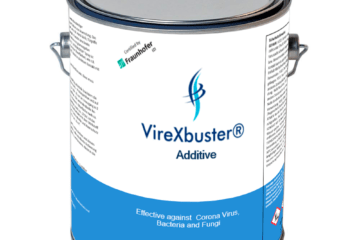
VireXbuster by DaXem GmbH
A hybrid broad-spectrum antimicrobial disinfectant with a very wide range of activity against viruses, bacteria, fungi, mould, and mildew — engineered for professional use across the most demanding environments.
Volume supply and logistics quotations available for event operators, hospitality groups, and facility managers. Contact DaXem GmbH for bespoke procurement.
What distinguishes VireXbuster from conventional disinfectants used in mass-event settings is the nature of its formulation. Where standard products target a narrow spectrum — typically respiratory or enteric pathogens — VireXbuster’s hybrid broad-spectrum formulation delivers efficacy across the full range of threats present in a World Cup environment: viruses, bacteria (including drug-resistant strains), fungi, mould, and mildew in a single application protocol.
For event operators managing dozens of surface categories across complex venues, the operational advantage of this approach is significant. A unified disinfection product reduces protocol complexity, staff training burden, and the risk of protocol gaps at the surface category boundaries where single-spectrum products fail.
Operational Deployment at Scale
VireXbuster Wall 5L is a water-based antimicrobial wall paint, applied with a professional spray-gun for even, controlled coverage across large interior surfaces — walls, ceilings, and structural panels in locker rooms, corridors, restroom facilities, and hospitality areas. VireXbuster Spray 1L is equally applied via spray-gun for targeted treatment of hard surfaces, ideal for roving hygiene teams covering high-touch points throughout the venue.
For multi-venue operations across multiple host cities, DaXem GmbH can coordinate centralised logistics supply with regional distribution points. Volume agreements are available for operators requiring consistent supply continuity across the full tournament period from June 11 to July 19, 2026.
Tournament Timeline: Hygiene Planning Milestones
The Strategic Argument for Investing in Event Hygiene
Beyond the public health imperative, there is a clear commercial case for investing in professional disinfection at World Cup 2026. A single widely-reported outbreak traced to a specific venue, hotel brand, or catering operator can cause reputational damage that outlasts the tournament by years. The cost of a robust disinfection programme — even across a multi-venue operation — is a fraction of the liability and brand damage associated with a publicised hygiene failure.
For hospitality operators, the World Cup also represents a preview of how event hygiene capability can become a commercial differentiator. Accredited-clean status, visible professional disinfection protocols, and documented antimicrobial programmes are increasingly valued by corporate clients booking hospitality packages. Operators who demonstrate verifiable hygiene standards will attract premium bookings in a market where health consciousness among high-value travellers has risen permanently.
The same logic applies to transport operators, fan zone managers, and food and beverage concessionaires. FIFA World Cup 2026 is not just a sporting spectacle — it is a 39-day test of operational excellence, and hygiene is one of the disciplines on which every operator will be judged.
Frequently Asked Questions
What pathogens spread most commonly at mass sporting events like the World Cup?
The highest-risk pathogen categories at mass sporting events include respiratory viruses (influenza, SARS-CoV-2 variants), enteric viruses (norovirus, Hepatitis A), and drug-resistant bacteria such as MRSA. High-contact surfaces — handrails, seating, restroom fixtures, food-service counters — act as amplification nodes when left untreated between event cycles. The international composition of World Cup crowds introduces additional pathogen diversity that regional single-spectrum disinfectants are not designed to address.
How does VireXbuster protect stadiums, fan zones, and transport hubs?
VireXbuster is a hybrid broad-spectrum antimicrobial disinfectant with a very wide range of activity against viruses, bacteria, fungi, mould, and mildew. Unlike single-class disinfectants, its advanced hybrid formulation addresses the full pathogen profile present in mass-event environments in a unified application protocol — reducing complexity, minimising protocol gaps, and delivering consistent efficacy across all surface categories from stadium seating to food-service counters.
Is VireXbuster suitable for food-contact surfaces?
No. VireXbuster is a professional antimicrobial coating and is not approved for food-contact surfaces. It is designed for treatment of non-food-contact surfaces such as walls, floors, handrails, seating, restroom fixtures, door handles, and structural panels. In catering and food-service environments, application is limited strictly to non-contact surfaces — counter edges, partition panels, queue barriers, payment terminals, and similar areas away from direct food or food-packaging contact.
How is VireXbuster Wall applied for large-area coverage in stadiums and venues?
VireXbuster Wall is a water-based antimicrobial wall paint applied with a professional spray-gun, which ensures the correct particle size and coating thickness for proper surface adhesion and long-lasting protection. Foggers are not suitable — their droplets are too fine to deliver adequate coverage for a paint-based product. For large interior surfaces such as locker room walls, restroom facilities, and hospitality corridors, spray-gun application provides efficient, even coverage with professional results.
How do I order VireXbuster for large-scale event or facility use?
DaXem GmbH can coordinate volume supply and centralised logistics for operators requiring consistent procurement across multi-venue or multi-city operations. Contact our team directly at info@daxem.de or call +49 (0) 6196 52 32 707 to discuss supply volumes, lead times, and logistics coordination for event-scale deployments.
Ready to Protect Your Venue?
The tournament starts June 11. Volume supply windows are closing. Contact DaXem GmbH today to discuss your event disinfection requirements.