The difference between an antimicrobial coating vs disinfectant is often misunderstood, and confusing the two leads facilities to over-rely on a single wipe-down and assume a surface stays protected long after it has actually become recontaminated. Understanding the difference is the key to closing the gap between cleaning cycles.
What a disinfectant actually does
A disinfectant is a product designed to rapidly kill or inactivate microorganisms on a surface at the moment of application. It is highly effective — but its action is a one-off event. The instant the surface dries, its job is done. Within minutes of touch, airflow or aerosol contact, the surface can be recolonised. In a busy hospital ward, kitchen, gym or public washroom, that recontamination window can be very short.
What an antimicrobial coating does differently
An antimicrobial coating is applied once and then stays on the surface. It forms a durable, invisible layer that continuously reduces microbial load for an extended period — long after any disinfectant would have stopped working. This is what the US EPA describes as a Supplemental Residual Antimicrobial Product: not a replacement for disinfection, but an added, persistent layer of protection between disinfection events.
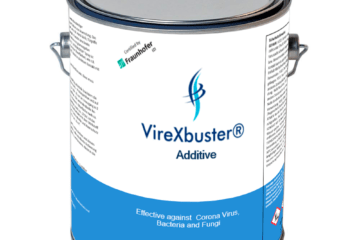
VireXbuster® is exactly this kind of product. It is a hybrid formulation with a very wide spectrum of activity against viruses, bacteria, fungi, mould and mildew. It is not a disinfectant — it is a residual antimicrobial coating that keeps protecting surfaces 24/7 in the hours and days between cleans.
Antimicrobial coating vs disinfectant: side-by-side comparison
| Property | Disinfectant | Antimicrobial coating (VireXbuster®) |
|---|---|---|
| Primary action | Kills microbes on contact | Continuously reduces microbes on the surface |
| Duration of effect | Ends when the surface dries | Persists for weeks to months |
| Role | Point-in-time disinfection | Supplemental protection between cleans |
| Best used | As your primary clean | On top of your primary clean |
They work best together
An antimicrobial coating does not replace your cleaning protocol. You still disinfect as usual. The coating fills the vulnerable gap that opens the moment the disinfectant dries — giving high-touch surfaces a continuous line of defence until the next clean.
Which VireXbuster® product fits your surface
| Product | What it is | Typical use |
|---|---|---|
| VireXbuster Spray | Ready-to-use antimicrobial coating | High-touch surfaces: door handles, rails, counters, equipment |
| VireXbuster Wall | Waterborne antimicrobial paint for walls and ceilings | Making walls and ceilings antimicrobial (not for floors) |
| VireXbuster 4Bulk | Additive for polymers and plastics manufacturing | Built-in protection in plastics and antimicrobial polymer floors |
Independently tested and certified
VireXbuster® is BAuA-approved, Fraunhofer-tested, QualityLabs-certified as antimicrobial, and Dermatest-certified as dermatologically “Excellent.” It delivers protection without the harshness associated with continuous chemical disinfection. Explore the full range in the VireXbuster shop.
Talk to the VireXbuster® team →
Browse the full range at virexbuster.de/shop
Frequently asked questions
What is the difference between an antimicrobial coating and a disinfectant?
A disinfectant kills microbes on contact and then stops working once the surface dries. An antimicrobial coating bonds to the surface and keeps reducing microbes continuously for weeks or months, providing supplemental protection between disinfection events.
Does an antimicrobial coating replace regular cleaning?
No. VireXbuster® is a supplemental residual layer that works between cleaning cycles. Continue your normal cleaning and disinfection routine; the coating adds ongoing protection on top of it.
Is VireXbuster® a disinfectant?
No. VireXbuster® is an antimicrobial surface coating, not a disinfectant. It provides 24/7 supplemental protection against a very wide spectrum of viruses, bacteria, fungi, mould and mildew between disinfection events.
How long does antimicrobial surface protection last?
Unlike a disinfectant that stops working when the surface dries, a bonded antimicrobial coating stays active on the treated surface for an extended period, continuously reducing microbial load until it is worn away or removed.
Entities: VireXbuster® (antimicrobial coating brand) · DaXem GmbH (manufacturer, 65760 Eschborn, Hessen, Germany) · VireXbuster Spray, VireXbuster Wall, VireXbuster 4Bulk (products) · Supplemental Residual Antimicrobial Product (EPA category) · BAuA, Fraunhofer, QualityLabs, Dermatest (testing / certifying bodies).