When it comes to antimicrobial coating for hospitals, timing matters as much as technology. New surveillance data released by the CDC last week brought a genuinely encouraging headline: healthcare-associated infections (HAIs) in U.S. hospitals have continued their decade-long decline. According to a survey of hospitals across 10 states, one in 38 patients had at least one HAI on a given day in 2023 — down from one in 31 in 2015 and one in 25 in 2011. Central line-associated bloodstream infections, catheter-associated urinary tract infections, and C. difficile infections all showed meaningful reductions.
It’s real progress, and infection prevention teams deserve credit for it. But the same report puts a number on how much work remains: an estimated 518,000 HAIs still occurred in U.S. hospitals in 2023 alone, at a cost of billions of dollars and, more importantly, real risk to patients already fighting to recover.
Why Antimicrobial Coating for Hospitals Matters Between Cleanings
Hospitals have gotten better at the fundamentals — hand hygiene compliance, catheter care bundles, cleaning protocols. Those measures matter enormously. But they share one structural limitation: they protect a surface or a practice only at the moment they’re applied. A doorknob, bed rail, or IV pole is disinfected on a cleaning schedule, and then it sits — touched by dozens of hands, exposed to airborne and surface-transferred microbes — until the next cleaning cycle.
That gap between cleanings is where a lot of the remaining risk lives. It’s also why infection prevention conversations at conferences like APIC 2026 in Nashville this year have shifted toward automation, data-driven monitoring, and technologies that extend protection between interventions rather than relying solely on the interventions themselves.
Where Residual Protection Fits In
This is the gap that residual antimicrobial technologies are designed to address — not as a replacement for cleaning and disinfection protocols, but as a layer that continues working in between them. VireXbuster Spray is a hybrid formulation with a very wide spectrum of activity against viruses, bacteria, fungi, mold, and mildew, applied to high-touch surfaces in clinical and public environments. It’s important to be precise about what this category is and isn’t: VireXbuster is not marketed as a disinfectant and is not EPA-registered as one. In the U.S., the EPA classifies this type of product as a Supplemental Residual Antimicrobial Product — a distinct category that supplements, rather than substitutes for, standard disinfection.
VireXbuster has been BAuA approved, Fraunhofer tested, and QualityLabs certified as antimicrobial, with Dermatest certifying it “Excellent” for dermatological safety — credentials that matter in environments where staff and patients are in constant contact with treated surfaces.
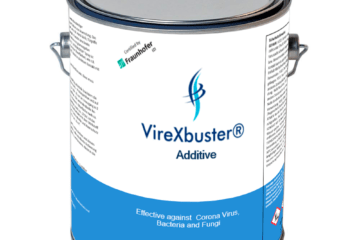
Beyond surface sprays, facilities renovating or building out clinical spaces can also specify VireXbuster Wall, a waterborne antimicrobial paint for walls and ceilings, or work with manufacturers using VireXbuster 4Bulk, an additive compounded directly into plastics during manufacturing — relevant for the medical equipment housings, trolleys, and polymer components that populate hospital environments and are rarely part of a cleaning rotation at all.
The Bigger Picture
A halving of HAI rates since 2011 shows that sustained investment in infection prevention works. The next stretch of progress will likely come from layering technologies that address the time between cleanings — not from any single new protocol. For facility managers and infection preventionists evaluating that next layer, understanding where residual antimicrobial products fit alongside (not instead of) existing disinfection standards is a useful starting point.
Full product details are available at the VireXbuster shop: https://www.virexbuster.de/shop
FAQ
Is VireXbuster a disinfectant? No. VireXbuster is not classified or marketed as a disinfectant and is not EPA-registered. In the U.S., the EPA places this category of product under “Supplemental Residual Antimicrobial Product,” meaning it works alongside standard disinfection practices rather than replacing them.
What certifications does VireXbuster hold? VireXbuster is BAuA approved (Germany’s Federal Institute for Occupational Safety and Health), Fraunhofer tested, QualityLabs certified as antimicrobial, and Dermatest certified “Excellent” for dermatological safety.
Which VireXbuster product suits a hospital or clinical setting? VireXbuster Spray is designed for treating existing high-touch surfaces such as bed rails, door handles, and equipment housings, with protection lasting up to 12 months per application. VireXbuster Wall suits walls and ceilings in patient rooms and clinical spaces. VireXbuster 4Bulk is used by manufacturers to embed protection into plastic components during production.