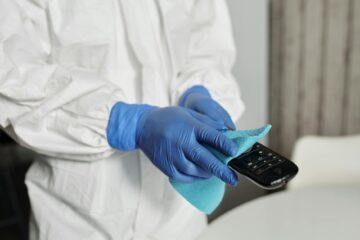
Indoor pollutant concentrations are frequently 2 to 5 times higher than outdoor levels
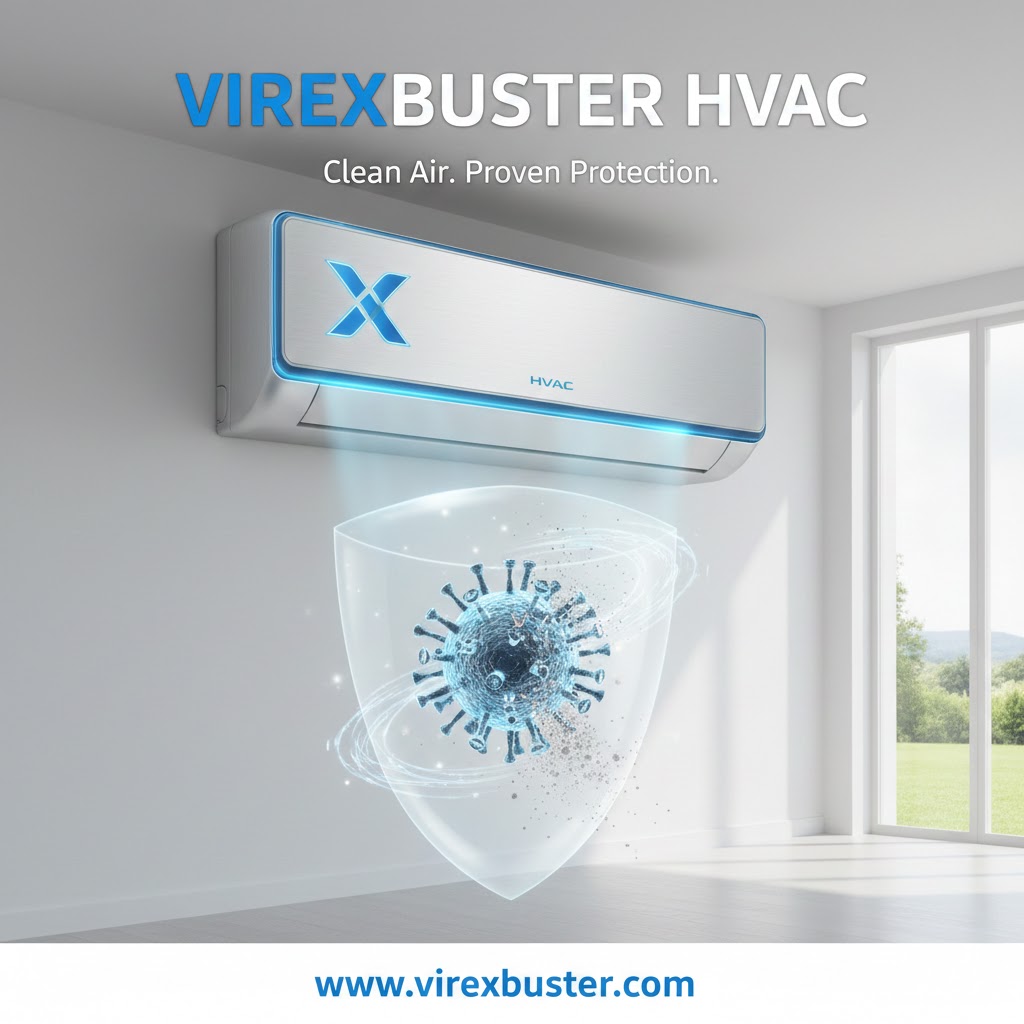
Most of us spend nearly 90% of our lives indoors, operating under the assumption that the walls around us provide a sanctuary. However, building science tells a different story. According to the Environmental Protection Agency (EPA), indoor pollutant concentrations are frequently 2 to 5 times higher than outdoor levels.
In the modern era of high-performance, tightly sealed building envelopes, the HVAC system serves as the literal “lungs” of the structure. While these systems are designed for thermal comfort, they often inadvertently become massive reservoirs for mold, bacteria, and viral pathogens. Moving beyond reactive maintenance, antimicrobial coatings have emerged as a critical infrastructure upgrade—transforming passive ductwork into an active shield that protects both public health and mechanical longevity.
Takeaway 1: De-Risking the “Energy Vampire” in Your Mechanical Room
For facility managers and developers, there is a direct, quantifiable link between microbiology and the bottom line. When microbial growth, or “biofilm,” accumulates on heat exchange coils, it creates an insulating layer that sabotages thermal transfer. This “biofouling” forces the system to work significantly harder to maintain setpoints.
- The Hidden Cost: ASHRAE research indicates that biofouled coils can spike energy consumption by 17% to 35%.
- The Strategic Solution: Implementing antimicrobial coating retrofits allows operators to recapture this lost efficiency. Real-world data shows immediate energy savings of 8% to 12% post-application.
By suppressing microbial growth, these coatings represent a sophisticated de-risking strategy for operational budgets, simultaneously advancing sustainability goals and lowering utility overhead.
“Clients won’t even consider a coating without a Declare label or EPD now—it’s table stakes, not a differentiator.” — Director of HVAC Engineering
Takeaway 2: Beyond Cleaning—Persistence and the 36% Clinical Reduction
Standard “terminal cleaning” is an event; antimicrobial coatings are an infrastructure state. Traditional disinfectants offer no residual protection, meaning surfaces can be re-contaminated within 24 hours. Coatings provide “persistence”—a continuous defense that remains active for up to 12 months.
The business case for this persistence is most compelling in the healthcare sector, where HAIs (Healthcare-Associated Infections) impose a $30 billion annual burden on the US healthcare system. A landmark study by Ellingson et al. (Source 4) conducted across two urban hospitals revealed:
- A 36% decline in pooled HAIs (specifically MDRO-BSIs and CDIs).
- A staggering 75% to 79% reduction in total bacterial colony-forming units (CFUs).
- Market-wide, these interventions are now associated with HAI reduction rates of up to 40%.
These coatings actively suppress high-risk pathogens, including Legionella pneumophila, MRSA, and SARS-CoV-2, which is known to survive up to 72 hours on untreated surfaces.
Takeaway 3: Engineering Breakthroughs—The End of “Suffocating” HVAC Systems
Historically, building engineers resisted internal coatings due to fears of damaging system performance. Legacy epoxy-based coatings were thick and restrictive, often reducing airflow by 12% to 18%.
Modern nanotechnology-enabled formulations have rendered this concern obsolete. Current material science allows for coatings that achieve 99.9% microbial inhibition while causing less than 3% airflow restriction. This technological leap removes the primary barrier to adoption, ensuring that air quality improvements do not compromise the mechanical design intent or pressure gradients of the ventilation system.
Takeaway 4: Regulation is Turning Fines into Incentives
The legal and financial landscape surrounding Indoor Air Quality (IAQ) is shifting from voluntary guidelines to strict, performance-based verification.
The “Sticks”: Regulatory Penalties
- ASHRAE Standard 241-2023: Establishes new, rigorous air cleaning mandates for public buildings.
- NYC Local Law 89 (2024): Imposes annual fines of up to $50,000 for buildings exceeding microbial colony thresholds, verified through mandatory quarterly reports.
The “Carrots”: Financial Incentives
- Insurance Discounts: Insurers now offer 12–18% premium discounts specifically for buildings utilizing UL 2998-certified antimicrobial systems.
- Risk Mitigation: Facilities using certified coatings report 22% lower insurance claim frequencies for air quality incidents.
- Sales Velocity: “Smart/Healthy” homes and commercial properties achieve 7% to 9% faster sales velocity in competitive markets.
Takeaway 5: Climate-Adaptive Defense
Geography dictates the microbial threat profile. A sophisticated IAQ strategy requires climate-specific coating properties:
- Humid Regions (e.g., Coastal Florida, SE Asia): Focus on high hydrophobicity to repel moisture and manage fungal spore concentrations that can be 3–5x higher than arid regions. In Singapore, coatings must reduce microbial contamination by ≥80% to qualify for Green Mark Certification incentives.
- Arid Regions (e.g., Middle East): Formulations require anti-abrasive properties to combat the accumulation of sand and particulates that trap organic debris.
- Cold Climates (e.g., Northern Europe): Prioritize rapid-drying properties to manage winter condensation and the intermittent wet-dry cycles where biofilms flourish.
Takeaway 6: The Standard of Non-Toxic Innovation
As we seal buildings tighter for energy efficiency, the chemistry we introduce into the air-handling system must be beyond reproach. Today, 68% of facility managers prioritize coatings with low volatile organic compound (VOC) emissions and non-toxic profiles.
Innovation is led by German-engineered technologies like VireXbuster, which represents the new benchmark for safety and efficacy.
- Scientific Rigor: Efficacy is independently verified by the Fraunhofer Institute and Quality Labs, achieving >99.99% reduction in pathogens like E. coli and S. aureus in under 24 hours.
- Safety Certified: Awarded an “Excellent” rating for skin safety by Dermatest GmbH, and it is both copper-free and nano-material-free.
- EPA Alignment: Defined as a “Supplemental Residual Antimicrobial Product” under EPA guidelines, providing a durable 12-month defense that complements standard cleaning protocols.
Closing: The Future of the “Living” Building
We are entering the era of the “predictive” building. The integration of IoT sensors now allows for real-time monitoring of surface humidity and microbial loads. According to a 2024 study of 500 smart buildings, facilities utilizing antimicrobial-coated components saw a 35% reduction in reactive maintenance interventions.
As building envelopes continue to tighten to meet Net-Zero goals, the active suppression provided by coatings is no longer an optional luxury—it is a mechanical necessity. Soon, we will view an un-coated HVAC system with the same skepticism we now reserve for buildings without fire sprinklers or basic filtration. The question for owners and managers is no longer if they should treat their infrastructure, but how quickly they can upgrade to meet these inevitable new standards of health and efficiency.