No Vaccine. No Antiviral. The 2026 Ebola Crisis and Why Structural Hygiene Is Now the Primary Bio-Defence Line
Key takeaway: The 2026 Bundibugyo Ebola outbreak in the DRC and Uganda has no approved vaccine and no approved antiviral treatment. When pharmaceutical countermeasures are absent, the physical environment must serve as the primary barrier to transmission. Passive, continuous antimicrobial surface engineering — not reactive manual cleaning — is the only operationally viable way to close the “cleaning gap” in high-traffic public infrastructure.
A major international health emergency is unfolding in Central Africa, completely shifting the paradigm of infection control.
The World Health Organization (WHO) and Africa CDC have declared a Public Health Emergency of International Concern (PHEIC) as a highly aggressive Ebola outbreak expands rapidly across borders.[1][2] Striking the Democratic Republic of the Congo (DRC) and surging into Uganda, this expansion is triggering global alarm for one critical reason: the virus has changed its profile, and our standard medical countermeasures no longer work.[1][2]
For facilities managers, clinical procurement officers, and public health directors, this crisis underscores a brutal reality: relying on reactive, localised containment is a failing strategy. True bio-security requires a permanent infrastructure of passive hygiene.
1. The 2026 Outbreak: Why This Expansion Is Different
In past years, the global community fought the Zaire strain of the Ebola virus, successfully deploying highly effective, FDA-approved vaccines — including Ervebo — and monoclonal antibody treatments to suppress transmission chains.
The current 2026 crisis is entirely different.
With hundreds of suspected cases and a surging death toll, the virus has expanded geographically from remote rural outposts into highly connected urban hubs, including Uganda’s capital, Kampala.[1][2] Cross-border trade, mining-related mobility, and dense public transport networks are fuelling transmission velocity. International public health agencies are now scrambling to contain a pathogen against which the global population carries zero baseline immunity.[2]
2. Structural Breakdown and the “Cleaning Gap”
As seen in previous filovirus events, traditional containment relies heavily on the speed of case isolation and immediate surface disinfection.[4] In real-world scenarios, however, environmental services (EVS) teams face compounding operational hurdles:
- Recontamination velocity. Ebola spreads through direct contact with infected bodily fluids — blood, sweat, saliva, vomit — deposited on environmental surfaces.[3] Even a terminal wipe-down that eliminates 100% of surface pathogens leaves the surface entirely unprotected the moment the disinfectant evaporates and the next person makes contact.
- Geographic and civil friction. Logistical blockades, contact-tracing failures, and complex cross-border movement patterns mean public health authorities cannot intercept every transmission chain before it reaches public infrastructure.[2][4]
This leaves public transit systems, airport customs terminals, clinical triage desks, and community gathering spaces completely vulnerable during what epidemiologists call the “cleaning gap” — the operationally inevitable windows of time between manual disinfection cycles.
[Pathogen Deposited on Surface]
         │
         ▼
[Manual Wipe Cleans Surface — Temporarily]
         │
         ▼  (Disinfectant Evaporates — Protection Ends)
[The Cleaning Gap Begins]
         │
         ▼
[Surface: Passive. Unprotected. Recontamination Risk: 100%]
         │
         ▼
[Continuous Chain of Transmission Multiplies Across Public Touchpoints]
In a slow-moving, well-resourced outbreak, EVS teams can compress this gap. In a fast-moving, geographically dispersed emergency with no pharmaceutical backstop, they cannot. The interval between cleans is measured in hours. The interval between high-risk surface contacts is measured in seconds.
3. Shifting the Defence: Structural Hygiene as a Bio-Shield
When vaccines and therapeutics are unavailable, environmental engineering must step in to break the chain of transmission mechanically. This is precisely why material science innovations like VireXbuster are becoming central to modern pandemic preparedness strategy.
The core principle is straightforward: instead of waiting for a cleaning crew to respond to a bio-hazard event, the building infrastructure itself must be inherently hostile to viral life. By applying a micro-thin layer of a proprietary hybrid antimicrobial formulation onto high-touch surfaces, an environment shifts from a passive landing pad to an active hygiene engine — one that operates continuously, without human intervention.
Mechanism: How It Acts on Enveloped Viruses
Enveloped viruses — including filoviruses such as Ebola — rely on intact structural proteins to bind to and enter human host cells. VireXbuster’s hybrid formulation has a very wide spectrum of activity against viruses, bacteria, fungi, mold, and mildew. Upon surface contact, it targets the structural integrity of these pathogens, neutralising viral load without releasing harmful chemical fumes or requiring active dosing by staff.
The protection is not event-driven. It is always on.
The HVAC and Public Transit Imperative
The Africa CDC’s field analysis of the 2026 expansion explicitly identifies intense cross-border mobility as the primary acceleration driver.[2] This makes the following infrastructure categories the highest-priority targets for permanent antimicrobial treatment:
- Airport check-in kiosks, customs desks, and boarding gate handrails
- Public transit handholds, seat surfaces, and ticketing interfaces
- Hospital and clinic triage desks, waiting room furniture, and call buttons
- HVAC ventilation systems serving high-occupancy enclosed spaces
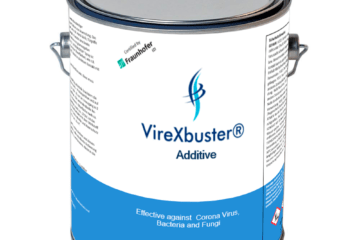
Applying VireXbuster Spray to these surfaces, or specifying VireXbuster Wall for facilities undergoing construction or refurbishment, is currently the only economically viable strategy to continuously lower baseline pathogen loads across high-traffic public infrastructure — without increasing EVS headcount or frequency.
The Pandemic Preparedness Principle: When there is no shot to give and no pill to prescribe, the physical environment must serve as the primary line of defence. Passive infrastructure hygiene is not a supplement to pharmaceutical countermeasures — in their absence, it becomes the countermeasure.
Conclusion: Engineering for Permanence
The expanding Bundibugyo Ebola outbreak of 2026 is a stark reminder that public health threats can — and do — outpace pharmaceutical development.[1] The Zaire strain took years and billions of dollars to produce effective countermeasures. The Bundibugyo strain offers no such runway.
Relying on human labour to manually maintain sterile surfaces in high-traffic zones is an operational impossibility at epidemic scale. To contain highly contagious, evolving pathogens that circulate freely through the same public infrastructure billions of people use daily, our buildings, transit systems, and clinical environments must be structurally engineered not merely to look clean — but to remain permanently hygienic.
VireXbuster exists precisely for this gap: the hours between cleans, the surfaces between interventions, and the moments when no pharmaceutical tool is available. In those moments, the surface itself must work.
Frequently Asked Questions
What is the Bundibugyo Ebola strain and why is it different from previous outbreaks?
The Bundibugyo strain (Orthoebolavirus bundibugyo) is a rare, highly lethal Ebola variant distinct from the Zaire strain that dominated past outbreaks. There are currently no FDA-approved vaccines and no approved antiviral treatments for the Bundibugyo strain. The standard medical countermeasures used in previous outbreaks — including the Ervebo vaccine and monoclonal antibody therapies — offer no protection against it.[1]
What is the “cleaning gap” in infection control?
The cleaning gap is the period between manual disinfection cycles during which a surface is entirely unprotected against recontamination. Once a cleaning agent evaporates, a treated surface is passive — any subsequent pathogen deposit from a cough, unwashed hand, or contaminated contact leaves it as hazardous as before it was cleaned. In high-footfall environments, this gap is operationally unavoidable.
How does VireXbuster close the cleaning gap?
VireXbuster is categorised by the US EPA as a Supplemental Residual Antimicrobial Product. It bonds to surfaces and maintains continuous antimicrobial activity — it does not evaporate, does not require reapplication after routine cleaning, and does not depend on staff attendance to remain active. It works in the gaps: between cleans, between shifts, and between pharmaceutical options.
Is VireXbuster effective against enveloped viruses such as Ebola?
VireXbuster’s hybrid formulation has a very wide spectrum of activity against viruses, bacteria, fungi, mold, and mildew. Enveloped viruses — including filoviruses — rely on intact structural surface proteins to infect host cells. VireXbuster targets these components on contact. The product is independently tested by the Fraunhofer Institute, certified by QualityLabs, BauA approved, and rated “Excellent” for dermatological safety by Dermatest.
Which surfaces should be prioritised for antimicrobial coating in outbreak preparedness?
Priority surfaces are those with the highest touchpoint frequency and longest intervals between cleans: airport check-in kiosks, public transit handrails, clinical triage desks, waiting room furniture, lift buttons, and HVAC components. VireXbuster Spray applies to hard surfaces; VireXbuster Wall provides continuous protection on walls and ceilings. For large-scale procurement enquiries, contact us at virexbuster.de/contact-us.
References
- Baraniuk, C. (2026). Ebola: WHO declares emergency as strain with no vaccine kills 100 in DRC and Uganda. BMJ, 393, e313572. https://doi.org/10.1136/bmj-2026-313572 (Cited by: 4)
- Iacobucci, G. (2026). Ebola outbreak: 139 dead as WHO warns of “scale and speed” of spread in central Africa. BMJ, 393, e834685. https://doi.org/10.1136/bmj-2026-834685
- Stephens, M. T. (2026). Risk behaviour associated with contracting the Ebola virus at funerals: a study of Liberians attending the funerals of individuals deceased from Ebola. Frontiers in Public Health, 14, 1735066. https://doi.org/10.3389/fpubh.2026.1735066
- Wells, C. R. (2020). The exacerbation of Ebola outbreaks by conflict in the Democratic Republic of the Congo. Proceedings of the National Academy of Sciences, 117(38), 23922–23929. https://doi.org/10.1073/pnas.1913980116 (Cited by: 119)
Equip your facility for the next outbreak — before it arrives.
Contact VireXbuster →BauA approved · Fraunhofer tested · QualityLabs certified · Dermatest “Excellent” · EPA Supplemental Residual Antimicrobial Product